
Knee Bursitis Explained: What’s Behind the Pain and Swelling
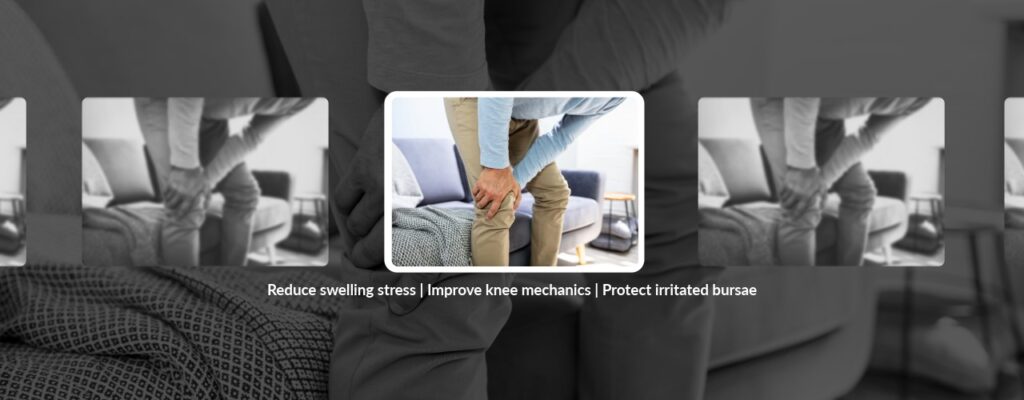
A swollen, tender knee that does not seem connected to a specific injury can be confusing and frustrating. For adults dealing with this, knee pain from bursitis is often the explanation that nobody thought to look for. Understanding what is happening inside the joint, why it develops, and what helps is the first step toward feeling better.
The Small Sac That Causes Big Problems
The knee contains small fluid-filled sacs called bursae. Their job is to reduce friction between the moving parts of the joint. When one of these sacs becomes irritated, it fills with excess fluid and swells. That swelling creates pressure, and that pressure is what produces the familiar aching, tenderness, and puffiness that patients notice.
It is a protective response that has gone into overdrive. The bursa is trying to cushion an area that is being stressed. The problem is that the swelling itself becomes part of the problem.
Why Bursitis Develops
Knee pain from bursitis does not always have a single clear cause. It tends to develop through a combination of factors that accumulate over time.
Repetitive kneeling, prolonged pressure on the knee, or sudden increases in activity are common triggers. Weakness in the hip and thigh muscles shifts more load onto the knee joint and increases the stress on the bursae. Previous knee injuries that were never fully rehabilitated change how the joint handles everyday demands. Work that requires prolonged kneeling or squatting places sustained pressure on specific bursae that are not designed for that kind of load.
What It Feels Like
The experience of knee pain from bursitis varies depending on which bursa is affected and how irritated it has become. Common patterns include:
- Swelling at the front, side, or back of the knee that appears gradually or after a specific activity
- Tenderness when pressing directly on the swollen area
- Stiffness that makes bending and straightening the knee uncomfortable
- Aching that worsens after prolonged kneeling, squatting, or stair use
- A knee that feels warm and full, especially after an active day
What Helps Before a Formal Plan Begins
A few simple adjustments reduce irritation while care is being arranged:
- Avoiding the sustained positions and activities that trigger swelling gives the bursa a chance to settle.
- Using a padded surface when kneeling at work or during home tasks reduces direct pressure on vulnerable areas.
- Gentle movement within comfortable limits keeps the surrounding muscles active without adding load to the irritated bursa.
- Consistent sleep supports the body’s ability to manage inflammation naturally.
What the Evaluation at NY Sports and Spinal Physical Therapy Looks For
The assessment at NY Sports and Spinal Physical Therapy looks beyond the swelling itself. Your clinician checks how the knee moves and whether stiffness in the joint is contributing to abnormal loading. Hip and thigh muscle strength is tested because weakness there is one of the most consistent contributors to bursitis in active adults. Movement patterns during walking and functional tasks are observed to identify the habits that are placing repeated stress on the affected area. The overall picture of work demands, activity history, and any previous knee injuries is discussed to understand what allowed the problem to develop.
How Physical Therapy Helps
Treatment at NY Sports and Spinal Physical Therapy for knee pain from bursitis targets the contributors identified during the assessment. Here’s how:
- Hands-on work reduces joint stiffness and soft tissue tension around the knee, supporting more comfortable movement during daily activity.
- Progressive strengthening of the hip and thigh muscles reduces the load the bursa absorbs during walking, stair use, and prolonged standing.
- Movement and activity instructions address the specific habits and work demands that have been irritating the bursa and give practical alternatives that protect the knee without requiring a complete change in lifestyle.
A Knee That Stops Demanding Your Attention
Swelling and tenderness that show up every time you kneel, climb stairs, or push through a busy day are not something to simply work around. They are signals worth responding to.
The team at NY Sports and Spinal Physical Therapy helps patients understand what is driving their symptoms and builds a plan that addresses it directly. Call today to schedule your evaluation and find out what your knee has been trying to tell you.